
English| EUR
Suggested for you
More currencies
Choose a language
The Amalfi Coast demands more advance planning than most Italian destinations. Narrow coastal roads, limited parking, seasonal ferry schedules, and hotel availability in peak months mean your logistics shape your entire experience. This guide covers the structural decisions that determine whether your visit flows smoothly or dissolves into improvisation.
Quick answer
Planning an Amalfi Coast trip requires choosing your base town, booking accommodation 3-4 months ahead for April through October visits, and mapping transport between villages before arrival. The region has no entrance fee, but individual sites charge separately. Most visitors allocate 3-5 days to cover Positano, Amalfi, Ravello, and day trips to Capri or Pompeii. Arrive at your first destination between 08:00 and 10:00 to avoid excursion bus crowds and midday heat.
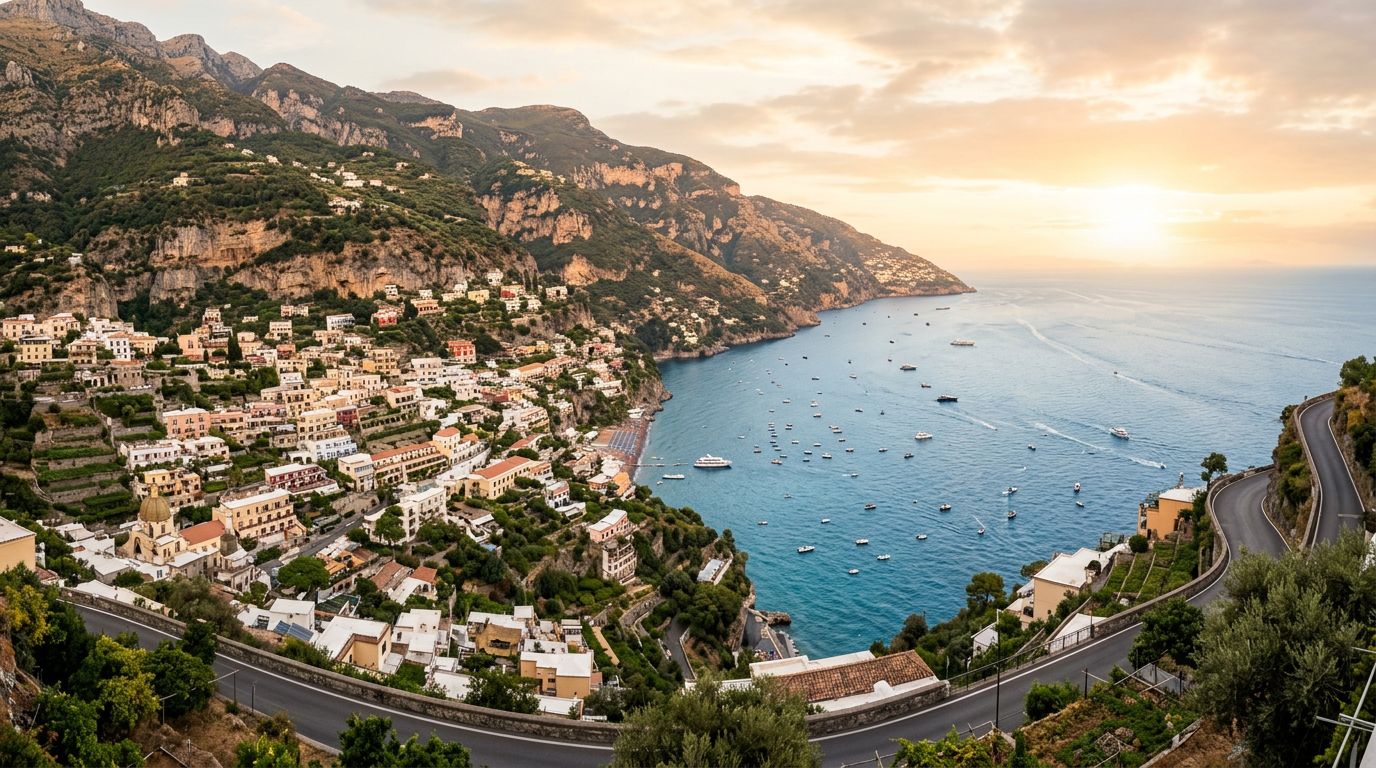
The Costiera Amalfitana stretches 50 kilometers along sheer limestone cliffs, with thirteen comuni perched between the Lattari Mountains and the Tyrrhenian Sea. Unlike compact urban destinations, this UNESCO World Heritage landscape requires sequential planning rather than spontaneous wandering. The single coastal highway, SS163, connects every village but permits only one-way traffic in sections during summer. How to plan a trip to the Amalfi Coast begins with understanding the infrastructure constraints. No train serves the coast directly. Buses run frequently but fill quickly in high season. Private water taxis and seasonal ferries offer faster connections between major towns but operate limited schedules outside April through October. Your choice of base town determines which sites become day trips and which require overnight stays. Positano offers luxury and beach access but sits at the western end, making eastern destinations like Vietri sul Mare full-day commitments. Amalfi town provides central access and better public transport links. Ravello sits 365 meters above sea level with commanding views but no beach. Accommodation availability drives the timeline for Amalfi Coast itinerary planning. Properties in Positano and Ravello fill by February for July and August arrivals. September offers ideal conditions with warm water, harvest festivals, and thinner crowds, but books nearly as early. The shoulder months of April, May, and October provide cooler temperatures and better rates, though some beach clubs and restaurants operate reduced schedules. Winter closures affect roughly 40 percent of tourism infrastructure between November and March. Structuring your days around the morning arrival window reduces friction considerably. Tour groups from Naples and Sorrento descend between 10:30 and 15:00, compressing available space on viewpoints, in cathedral cloisters, and along shopping lanes. The Via dei Mulini footpath from Amalfi to Atrani, the Sentiero degli Dei hiking trail above Positano, and the terraced gardens of Villa Cimbrone in Ravello all reveal themselves more clearly before the daily surge. Ferry schedules align with this rhythm, with first departures leaving Salerno and Sorrento by 08:30.
“The single coastal highway permits only one-way traffic in sections during summer, making your choice of base town a structural decision rather than a preference.”
The best arrival window is 08:00–10:00 to avoid peak heat and daily crowds from excursion buses. Early arrivals allow for a more manageable pace when exploring the region.
Mild, 15°C to 22°C
Floral blooms and pleasant walking temperatures occur before the summer humidity arrives.
Hot, 25°C to 30°C+
This period experiences peak visitor volumes and high temperatures, making early morning starts essential.
Warm, 18°C to 25°C
Sea temperatures remain comfortable while crowd levels decrease significantly compared to summer months.
—
Arriving between 08:00–10:00 prevents conflict with daily excursion bus schedules and midday heat.
Verdict: The optimal experience occurs Tuesday to Thursday between 08:00–10:00 during the months of April or October.
The Amalfi Coast is located at Costiera Amalfitana, 84011 Amalfi, Province of Salerno, Italy. Visitors typically reach the region by arriving at transit hubs in Naples or Salerno before connecting via bus, ferry, or private transfer.
Circumvesuviana from Naples to Sorrento
SITA Sud line from Sorrento to Positano/Amalfi
Ferry from Salerno or Naples to Amalfi
SS163 Amalfitana road
To avoid peak heat and daily crowds from excursion buses, aim for an arrival window of 08:00–10:00.
The Amalfi Coast is a public region with no entry fee for visitors. Individual sites, such as museums, gardens, and historical landmarks, charge separate admission fees.
Verdict: A typical visitor pays 0 EUR to enter the region, with total expenses depending entirely on the specific attractions selected for the itinerary.
The Amalfi Coast is a public region and remains accessible to visitors throughout the week. Public areas and roads are open at all times.
Reserve high-demand experiences and confirm documentation well before departure to avoid last-minute complications.
Everything you need to know about how to plan a trip to the amalfi coast
To learn how to plan a trip to the amalfi coast effectively, focus on base location selection and transport logistics early. Most travelers benefit from grouping visits by coastal proximity to minimize time spent on winding roads.
The best arrival window is 08:00–10:00 to avoid peak heat and daily crowds from excursion buses. Visiting during this time ensures a smoother experience at popular landmarks.
There is 0 EUR entrance fee for the region as it is a public area. Individual sites and specific attractions within the province charge separate fees.
When considering how to plan a trip to the amalfi coast with family, prioritize shorter travel durations between towns. Select centralized accommodations to reduce the need for constant transfers with luggage and gear.
A common mistake is underestimating travel times between cliffside villages due to heavy traffic. Always build buffer time into your daily schedule to navigate the winding coastal topography comfortably.
You can explore regional excursions to simplify the logistics of your visit. These organized outings help manage travel details and offer structured access to historical sights.
Navigating the region by bus or ferry is a standard approach for many visitors. Always verify schedules in advance as service frequency can change based on the season and time of day.
The region is accessible daily with opening hours of 00:00–23:59 from Monday through Sunday. While the area itself is always open, individual businesses and historic venues maintain their own operational schedules.